
Allah (عز و جل) says in the Qur’an:
(…وَتِلْكَ الْأَيَّامُ نُدَاوِلُهَا بَيْنَ النَّاسِ…)
…And these days [of varying conditions] We alternate among the people…
[Surah ‘Ale Imrān : 140]
Lucknow, being the continuously significant city in history that it is, has much to teach and impart of the sometimes dark reality of this verse. It is a city ruled at one time or another by most groups of people who now reside in it, whether it be the Hindus or the Nawabs or even foreigners, and more.
There’s a famous story (and as with most famous stories, it’s authenticity is questionable) of one of the final Nawab rulers of Lucknow and how he lost his throne :
The story takes place less than a couple hundred years ago. The British Empire was in full swing, they were colonizing the world and India was their crown jewel. A land rich in culture, fertile soil, resources, and so on.
Perhaps most importantly, however, the British Empire’s greatest asset in colonizing India happened to be the Muslim rulers who were so ignorant of the realities around them that they gave up a whole civilization having been fostered over centuries in only a few moments and in return for nothing but humiliation in all books of history.
Our ruler was such a ruler.
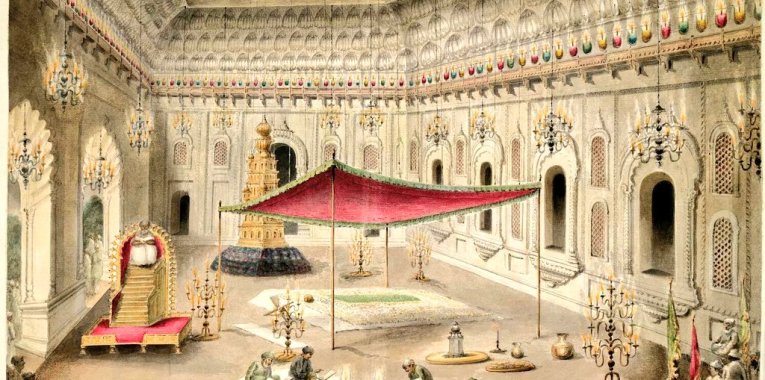
It is said of this ruler that he surrounded himself with such lavishness that it insulated him from the political realities which were taking place inside and outside the city. But despite his innumerable mistakes, he did make one good decision though – he married one of his courtesans. This woman was known for being wise, and would often advise him.
She would always counsel him on matters that were taking place around his tiny kingdom, and when the British started to approach the city, she told him that “we should leave.” He refused, being the proud & ignorant (a lethal combination) man that he was, and seeing his stubbornness, she ran – to Kathmandu, where she lived out the rest of her days in peace and tranquility.
Our ruler, on the other hand, refused to do as such until the British literally entered into Lucknow. It was at this point he realized it might indeed be beneficial for him to leave. There was only one problem – he needed to wear shoes before he could depart, and he didn’t know how to tie his shoes. He called his servants to come help him tie his shoes, and after some time of no response, he saw himself staring into what must have been quite a bemused British officer.
He was captured, taken and thrown in a jail in the then British Indian capital city of Kolkata where he rotted away to no one’s concern. The saddest part of this story though? That his great great grandchildren now drive rickshaws in the streets of Lucknow in order to make ends meet.
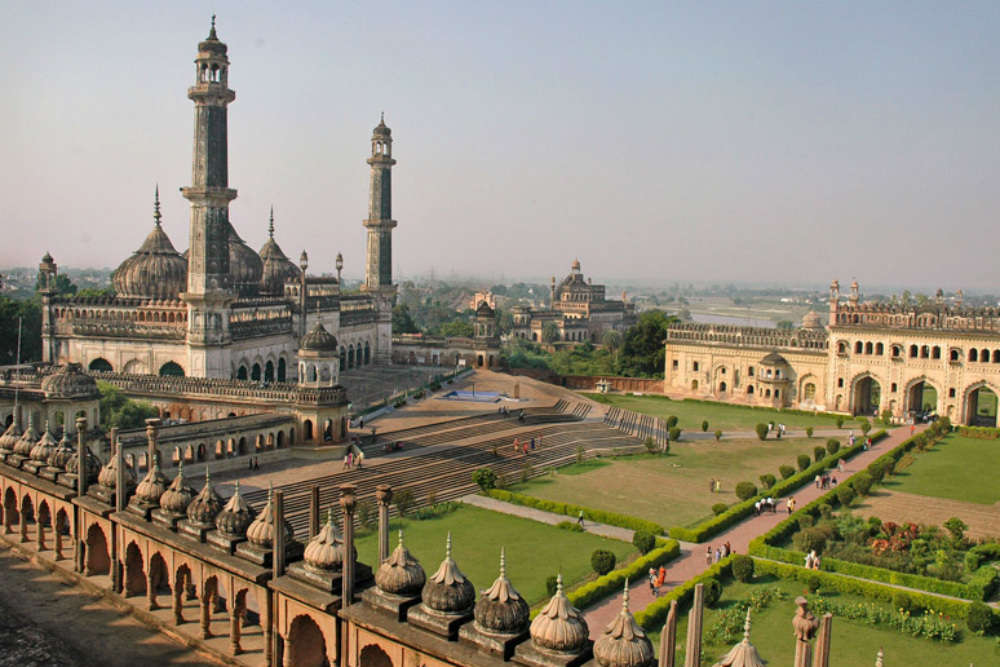
Taking a ride through the city of Lucknow, one can’t help but stare at the sights and just wonder. This was once an empire. Now, the rightful heirs of this once burgeoning kingdom are begging tourists for money, or hassling them an extra 10 rupees to take them on a tour of the relics of their own once great palaces and castles. Only to return every night after a long grueling shift to sleep in huts made of straw, or clay.
In the face of this grim reality, I ask myself why I came here. And I find one silver lining.
In Arabic, there’s a saying :
لكل سلطان زوال ، وليس لسلطان علم زوال
Every kingdom may perish, but the kingdom of knowledge will never perish.
Everything we as a people possess but our knowledge will eventually perish. And I live in a city which breaths this reality. People come here to study a knowledge that, while everything around it is constantly burning to ash, it only burns brighter and brighter.
 shariahsociety.com